
Introduction From Earth Supply to Moon Self-Reliance
In 2026, NASA is rewriting the rules of space exploration.
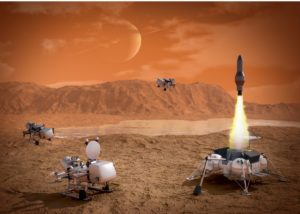
Instead of sending endless cargo from Earth, NASA plans to use what’s already on the Moon — a strategy called In-Situ Resource Utilization (ISRU).
This revolutionary approach means astronauts will extract oxygen, water, and even building materials directly from the lunar surface.
It’s a giant step toward sustainable space living and the future colonization of the Moon and Mars. 🌌
What Is In-Situ Resource Utilization (ISRU)?
“In-situ” is a Latin term meaning “on site.”
So, In-Situ Resource Utilization simply means using local materials found on another planet or moon to support missions, instead of relying on supplies from Earth.
For NASA, ISRU is the key to long-term exploration.
Rather than shipping tons of oxygen, water, or fuel — which costs billions — NASA’s new technology will turn moon dust into valuable resources.
Why the Moon Is the Perfect Place for ISRU
The Moon offers everything NASA needs to test and prove ISRU before humans go to Mars.
🌑 Regolith (Moon Dust):
Lunar soil contains oxygen, metals, and silicon — all essential for life support and construction.
❄️ Water Ice
Frozen water in the Moon’s South Pole craters can be extracted and split into hydrogen (for rocket fuel) and oxygen (for breathing).
☀️ Solar Energy
Abundant sunlight provides clean power to run extraction and 3D-printing systems.
NASA’s 2026 missions will focus on these resources to make the Moon a self-sustaining outpost.
NASA’s ISRU Technology How It Works
Oxygen Extraction from Moon Dust
Lunar regolith is rich in oxides — compounds that contain oxygen.
NASA’s engineers are testing MOXIE-like reactors (inspired by Mars experiments) to heat moon dust to 900°C and release oxygen gas.
This oxygen can be stored for breathing or converted into liquid oxidizer for rocket fuel.
Water Extraction and Fuel Production
At the lunar poles, permanently shadowed craters contain frozen water ice.
NASA’s VIPER rover (Volatiles Investigating Polar Exploration Rover) will explore these regions in 2026.
The ice can be melted, purified for drinking, or split via electrolysis into hydrogen and oxygen — creating fuel for return trips to Earth.
3D Printing with Lunar Materials
NASA’s ISRU systems can convert moon dust into 3D printing material.
By mixing regolith with binding agents or melting it directly, astronauts can print habitats, tools, and landing pads on-site — saving time, cost, and payload space.
Metal Extraction for Construction
Lunar soil contains aluminum, iron, and titanium.
NASA’s robotic systems will use electrochemical reduction to extract these metals, enabling robot-built lunar bases by 2026–2028.
The Artemis Program Testing ISRU in Real Missions
NASA’s Artemis Program is the heart of the ISRU plan.
By 2026, the Artemis III mission will send astronauts to the Moon’s South Pole — the richest area for ice and minerals.
Artemis will:
Test oxygen extraction systems in real lunar conditions.
Deploy VIPER to explore ice deposits.
Begin small-scale fuel and water production on-site.
This is the first practical step toward building a permanent lunar base, powered entirely by local resources.
NASA’s Global and Commercial Partners
NASA isn’t working alone — the 2026 ISRU missions are part of a massive collaboration:
SpaceX – transports ISRU payloads and landers.
Astrobotic & Intuitive Machines – deliver small robotic ISRU systems to test extraction tech.
ESA (European Space Agency) – developing oxygen-from-regolith systems.
Blue Origin – testing hydrogen production from lunar ice.
Private mining companies – exploring lunar metal extraction and fuel processing.
Together, they’re transforming the Moon into the first off-Earth economy. 💰
Benefits of ISRU for Future Space Missions
🌍Reduced Launch Costs
Every kilogram launched from Earth costs thousands of dollars.
ISRU cuts this cost by producing materials locally — reducing Earth-dependence dramatically.
🚀Sustainable Exploration
With local fuel and oxygen, missions can last longer, travel farther, and expand faster.
🧑🚀Safer Human Missions
Astronauts can create backup supplies directly on the Moon — making deep-space missions safer and more flexible.
🪐Foundation for Mars Colonies
Once proven on the Moon, the same ISRU technology will be used on Mars to extract oxygen and water from the soil there.
Challenges NASA Must Overcome
Even though ISRU sounds futuristic, it’s not easy:
Extreme Temperatures: Moon days can reach +120°C, and nights can drop to -170°C.
Dust Problems: Lunar dust is sharp and can damage equipment.
Energy Management: Extraction systems need reliable power even during long lunar nights.
Testing Reliability: Machines must work perfectly in low gravity and vacuum conditions.
NASA is using AI-powered systems and autonomous maintenance robots to handle these challenges in 2026.
SEO Highlights
Primary Keyword: NASA In-Situ Resource Utilization Moon 2026
Secondary Keywords: lunar ISRU, NASA Artemis ISRU, moon resource extraction, lunar oxygen production 2026
Meta Description (SEO-Ready):
Discover NASA’s 2026 In-Situ Resource Utilization technology — how lunar dust, ice, and sunlight are being turned into oxygen, fuel, and building materials on the Moon.
Search Intent: Informational + Space Technology
Target Audience: Space fans, tech enthusiasts, researchers, and science blogs
The Future Building the First Lunar Civilization
By 2026, NASA’s In-Situ Resource Utilization technology will make self-sufficient lunar living possible.
Instead of depending on Earth, astronauts will mine, build, and survive using the Moon’s own resources.
This innovation marks the beginning of off-world independence — the foundation for future human colonies on Mars and beyond. 🌖
With every mission, NASA brings humanity one step closer to turning the Moon into our second home in space. 🏠✨