
Meta Description
Explore NASA’s Lunar Gateway habitat systems for 2026, designed to support astronauts, provide sustainable living in lunar orbit, and enable long-term exploration of the Moon and beyond.
Introduction
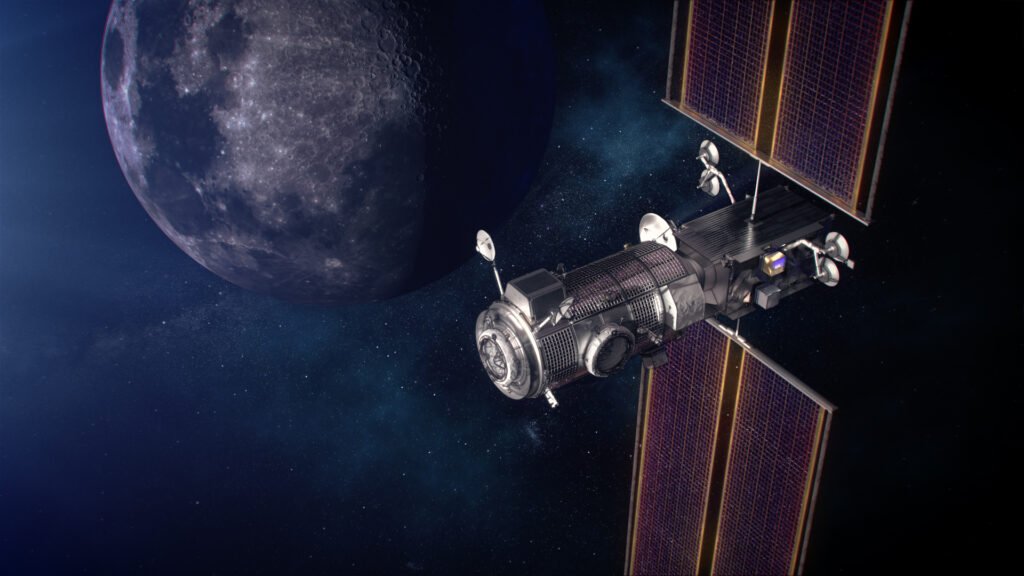
NASA’s Lunar Gateway is a critical component of the Artemis program, serving as a modular space station in lunar orbit to support sustainable human exploration of the Moon and future deep-space missions.
In 2026, NASA is advancing habitat systems for the Lunar Gateway, focusing on life support, modular living quarters, and innovative technologies that ensure astronauts can live and work safely in deep space for extended periods.
The Lunar Gateway will serve as a staging point for lunar surface missions, research hub, and a model for future habitats on Mars and other celestial bodies.
Why Lunar Gateway Habitat Systems Are Important
The habitat systems are essential because they:
Support Long-Duration Missions: Provide safe, sustainable living quarters for astronauts in lunar orbit.
Enable Lunar Surface Operations: Act as a transfer point for lunar landers and supplies.
Test Deep-Space Technologies: Life support, radiation shielding, and autonomous systems for future Mars missions.
Enhance Scientific Research: Offer laboratories for experiments in microgravity and lunar orbit conditions.
NASA’s 2026 habitat systems are designed with safety, modularity, and sustainability in mind, making them a cornerstone of human lunar exploration.
NASA Lunar Gateway Habitat Concepts 2026
NASA’s habitat systems include several innovative modules and technologies:
Life Support Systems
Closed-loop air, water, and waste recycling to sustain crews for months.
Environmental control to regulate temperature, humidity, and pressure.
Emergency backup systems for safety and redundancy.
Modular Living Quarters
Individual crew cabins for privacy and rest.
Common areas for dining, exercise, and collaboration.
Expandable design to accommodate more astronauts as missions grow.
Radiation Protection
Shielding to reduce exposure to cosmic rays and solar radiation.
Optimized module placement to create safe zones.
Advanced materials and onboard monitoring systems for crew health.
Workstations and Labs
Laboratories for biology, physics, and materials science experiments.
Remote-control stations for robotic lunar operations.
Data communication systems for Earth-based researchers.
Autonomous Systems and AI
Smart systems for habitat monitoring and maintenance.
AI assistance for life support management, navigation, and emergency response.
Reduces workload on astronauts and enhances mission safety.
Scientific and Operational Goals
NASA’s Lunar Gateway habitat systems aim to:
Support Artemis Missions: Enable astronauts to live and work in lunar orbit efficiently.
Sustain Long-Duration Crew Missions: Provide up to 30+ days of independent operations.
Advance Life Support Technologies: Test recycling systems, water recovery, and oxygen production.
Enable Lunar Surface Exploration: Serve as a staging point for landers and cargo.
Prepare for Deep-Space Habitats: Validate designs and technologies for Mars and beyond.
The Gateway habitats act as a laboratory, logistics hub, and living space for human exploration.
Challenges in Lunar Habitat Development
Radiation: Deep-space radiation is far higher than in low Earth orbit; protection is critical.
Limited Resupply: Habitat must sustain astronauts with minimal Earth support.
Microgravity Effects: Crew health requires exercise and countermeasures against muscle and bone loss.
Integration: Modules from international partners must work seamlessly together.
Reliability: Systems must operate autonomously for long durations in harsh conditions.
NASA addresses these challenges through advanced materials, life support innovation, redundancy systems, and international collaboration.
Impact of Lunar Gateway Habitat Systems
Human Exploration: Enables sustainable human presence in lunar orbit.
Scientific Advancement: Provides laboratories for cutting-edge research in microgravity and space biology.
Technology Development: Accelerates autonomous systems, recycling technologies, and modular space design.
Preparation for Mars: Habitats act as prototypes for future deep-space missions.
Global Collaboration: Brings together NASA, ESA, JAXA, and other partners for joint exploration.
The Gateway habitats lay the foundation for a permanent, sustainable human presence beyond Earth.
Future Prospects Beyond 2026
NASA envisions:
Expanding the Gateway with additional habitat and science modules.
Supporting longer-duration missions of 60–90 days in lunar orbit.
Using Gateway as a base for lunar surface outposts and resource extraction missions.
Testing new life support, propulsion, and autonomous systems for Mars exploration.
Serving as a model for international deep-space habitat collaboration.
By the 2030s, the Lunar Gateway could become a hub of human activity in cislunar space, supporting research, exploration, and even space-based manufacturing.
Conclusion
NASA’s Lunar Gateway habitat systems 2026 represent a pivotal step toward sustainable human exploration of the Moon and beyond. By integrating advanced life support, modular living quarters, radiation protection, and autonomous systems, the Gateway will provide a safe and functional environment for astronauts in lunar orbit.
These habitats are not only essential for the Artemis program but also pave the way for humanity’s expansion to Mars and the outer solar system, demonstrating how we can live, work, and thrive in space. 🌔🛰️