
Meta Description
Explore NASA’s next-generation space telescope technology in 2026, designed to study exoplanets, distant galaxies, and cosmic phenomena with unprecedented precision and resolution.
Introduction
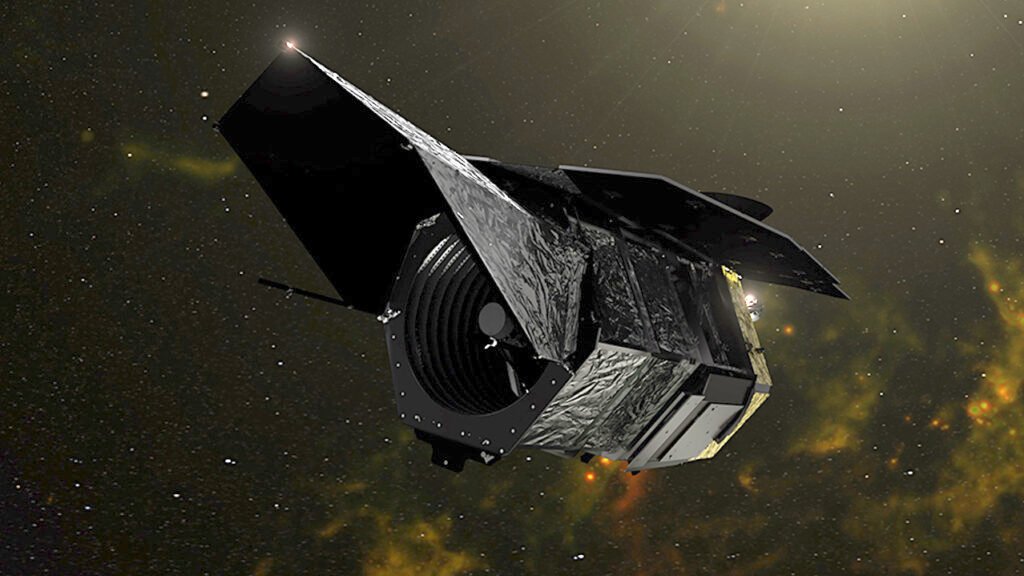
The quest to explore the cosmos is accelerating, and NASA’s next-generation space telescopes (2026) aim to revolutionize our understanding of the universe. These advanced instruments will provide higher resolution, broader spectral coverage, and deeper sensitivity than ever before, enabling discoveries in exoplanet science, galaxy formation, and fundamental astrophysics.
Next-gen telescopes are crucial for observing distant galaxies, black holes, and habitable exoplanets, helping scientists answer questions about the origins of the universe and the potential for life beyond Earth.
Why Next-Gen Space Telescopes Are Important
Next-gen space telescopes address limitations of current observatories:
Hubble and JWST Legacy: While transformative, current telescopes have spectral, resolution, and observational limitations.
Deeper Observation: Next-gen instruments can detect fainter objects billions of light-years away.
Exoplanet Imaging: Direct imaging and spectroscopy of Earth-like planets become feasible.
Multi-Wavelength Coverage: From ultraviolet to infrared, enabling comprehensive study of cosmic phenomena.
NASA’s 2026 technology developments aim to push the boundaries of sensitivity, precision, and scientific reach.
NASA Next-Gen Space Telescope Technologies 2026
NASA is developing several advanced technologies for its next-gen telescopes:
Advanced Mirror Systems
Ultra-lightweight segmented mirrors with active control for extreme precision.
Adaptive optics to correct distortions in real time.
Extremely large apertures for enhanced light-gathering capability.
High-Resolution Detectors
Cutting-edge CCD and infrared detectors with unprecedented sensitivity.
Low-noise electronics to capture faint cosmic signals.
Wide-field imaging for large-scale surveys of galaxies and star clusters.
Coronagraphs and Starshades
Instruments to block starlight for direct imaging of exoplanets.
High-contrast imaging to detect Earth-like planets in habitable zones.
Enable spectroscopy to analyze atmospheric composition and potential biosignatures.
Interferometry and Multi-Telescope Arrays
Combining signals from multiple telescopes to achieve ultra-high resolution.
Observing fine structures of distant galaxies, black holes, and stellar systems.
Enhances angular resolution beyond what a single telescope can achieve.
AI and Autonomous Operations
Onboard AI for data processing and anomaly detection.
Autonomous scheduling and adaptive observation based on real-time conditions.
Reduces reliance on Earth-based control, increasing efficiency.
Scientific Goals of Next-Gen Space Telescopes
NASA’s 2026 telescope initiatives aim to:
Exoplanet Discovery and Characterization: Identify Earth-like planets and study atmospheres.
Galaxy Evolution: Understand the formation and evolution of galaxies across cosmic time.
Dark Matter and Dark Energy Studies: Map large-scale cosmic structures to understand universe expansion.
Stellar Life Cycles: Observe star formation, supernovae, and black hole activity.
Fundamental Physics: Test theories of gravity, cosmology, and high-energy astrophysics.
These telescopes will provide unprecedented insight into the universe and its underlying physical laws.
Challenges in Developing Next-Gen Telescopes
Precision Engineering: Mirrors and instruments must maintain nanometer-level tolerances.
Launch Constraints: Large telescopes must be deployable from launch vehicles.
Thermal Management: Instruments require cryogenic cooling for infrared observation.
Data Volume: Extremely high data rates necessitate advanced processing and storage solutions.
Cost and Collaboration: Large-scale international cooperation is often required.
NASA addresses these challenges with innovative materials, foldable designs, AI-assisted control, and international partnerships.
Impact of Next-Gen Space Telescopes
Exoplanet Research: Direct detection of habitable worlds and biosignature analysis.
Cosmic Mapping: Detailed surveys of galaxies, black holes, and cosmic web structures.
Fundamental Physics: Insights into dark matter, dark energy, and general relativity.
Technological Advancement: Drives innovations in optics, sensors, AI, and space engineering.
Global Inspiration: Inspires public interest and STEM engagement worldwide.
Next-gen telescopes will reshape our understanding of the universe and redefine observational astronomy.
Future Prospects Beyond 2026
NASA envisions:
Deploying larger, more sensitive space observatories beyond Earth orbit.
Integrating multi-wavelength telescope networks for coordinated cosmic surveys.
Direct imaging of Earth analogs in nearby star systems.
Supporting missions to interstellar probes and deep-space observatories.
Continuing international collaborations to share data and advance global astronomy.
By 2030, these telescopes could revolutionize astronomy and answer some of humanity’s biggest cosmic questions.
Conclusion
NASA’s next-gen space telescopes tech 2026 represents a leap forward in exploring the universe. With advanced mirrors, high-resolution detectors, coronagraphs, starshades, and AI integration, these observatories will reveal unseen worlds, distant galaxies, and fundamental cosmic phenomena.
This technology promises not only to expand scientific knowledge but also to inspire humanity’s quest for understanding the cosmos, setting the stage for discoveries that will transform our view of the universe forever. 🔭🌌