

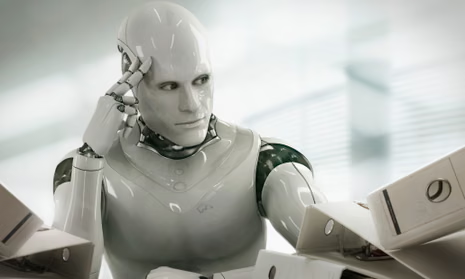
Artificial Intelligence (AI) has grown rapidly over the last few decades. Machines can now do things that once seemed impossible: drive cars, write stories, diagnose diseases, and even play complex games like chess and Go better than world champions. This progress has made many people wonder: will AI ever be smarter than humans?
What Does “Smarter” Mean?
Before answering, it’s important to understand what “smarter” actually means. Humans are intelligent in many different ways — we can solve problems, show creativity, feel emotions, and build relationships. AI today is very good at narrow tasks like recognizing faces or translating languages, but it doesn’t truly “think” or “understand” like a human does.
If “smarter” means being faster at calculations or remembering facts, AI already beats humans. But if it means being creative, self-aware, or emotionally intelligent, AI is still far behind.
Where AI Is Already Ahead
AI can process huge amounts of data far faster than any human. It can analyze millions of documents, detect patterns in seconds, and make predictions with high accuracy. In areas like math, chess, medical image analysis, or large-scale data handling, AI already outperforms us.
Where Humans Still Win
Humans have general intelligence — we can learn new things quickly, use common sense, and understand complex social and emotional situations. We also have values, morals, and empathy. AI does not truly “understand” context or ethics; it just follows patterns in data.
Could AI Surpass Human Intelligence?
Many scientists believe that one day we may create Artificial General Intelligence (AGI) — an AI that can learn and think across many fields, like a human. If that happens, it could surpass human intelligence in almost every way. Some experts think this might happen in a few decades; others think it could take centuries or may never happen at all.
The Challenges
Even if AGI becomes possible, making it safe and ethical is a huge challenge. A super-intelligent AI could solve major problems — like curing diseases or reversing climate change — but it could also be dangerous if not controlled properly. That’s why researchers are working on AI safety to ensure future AI systems align with human values.
The Bottom Line
Right now, AI is not “smarter” than humans in the full sense of the word. It’s extremely powerful in specific tasks but still lacks true understanding, creativity, and emotional depth. However, the pace of AI development is so fast that it’s hard to predict the future.
Will AI ever be smarter than humans? It’s possible — but how and when it happens depends on how we build and guide it.