
Building a city on the Moon might sound like something from a sci-fi movie, but NASA is seriously working on making it happen! With new technology and plans to explore space, humans could live and work on the Moon in the near future. Here’s how NASA plans to build a city on the Moon and why it matters.
Why Build a City on the Moon?
The Moon is close to Earth, only about 238,855 miles away, making it a perfect place to learn how to live in space. A lunar city would help scientists study the Moon, test new space technologies, and prepare for future trips to Mars and beyond. It could also become a hub for mining valuable resources and maybe even tourism.
NASA’s Artemis Program
NASA’s plan to return humans to the Moon is called Artemis. The goal is to land astronauts on the Moon by the mid-2020s and build a sustainable presence by the 2030s. Artemis will send astronauts to the lunar surface, especially the Moon’s South Pole, where there might be water ice — a key resource.
Building Blocks: Using Moon Materials
Carrying everything from Earth would be too expensive, so NASA plans to use local materials from the Moon to build structures. Scientists are studying how to turn lunar soil (called regolith) into building materials like bricks or concrete. This process is called in-situ resource utilization.
The Lunar Gateway
NASA is also building the Lunar Gateway, a small space station orbiting the Moon. It will act as a base for astronauts traveling to and from the lunar surface. The Gateway will provide a place to live, work, and store supplies, making lunar missions easier and longer.
3D Printing and Robots
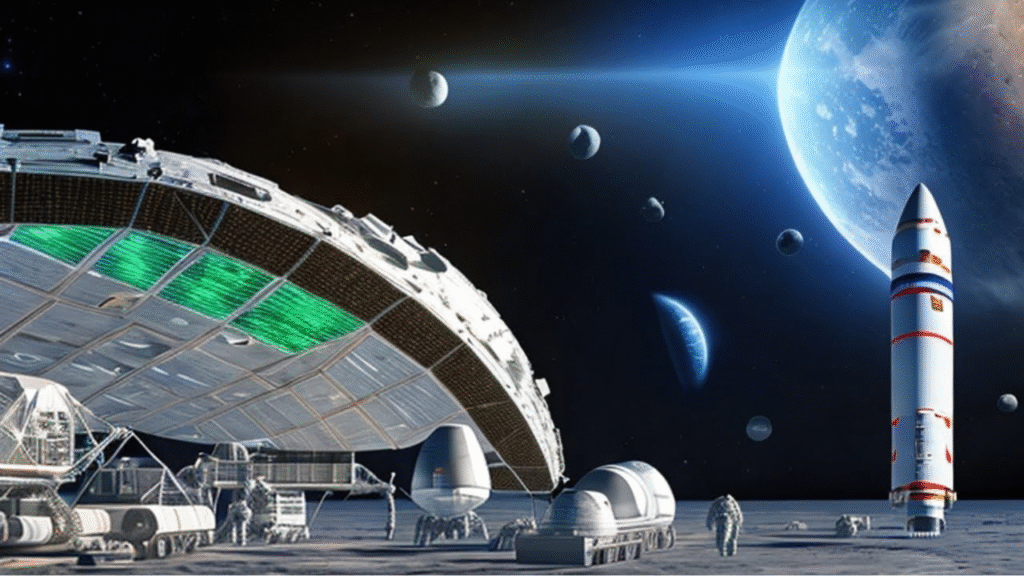
Robots and 3D printers will play a big role in building the city. They can work in the harsh lunar environment without needing oxygen or food. Robots could prepare the site, build homes, and set up solar panels for energy, all before humans arrive.
Living on the Moon
A lunar city will need special homes that protect people from extreme temperatures, radiation, and micrometeorites. Scientists are designing habitats with thick walls, possibly covered with lunar soil, to keep astronauts safe and comfortable.
Powering the City
Solar energy will be the main power source since the Moon gets plenty of sunlight — especially near the poles where the sun shines almost all day during lunar summer. NASA is also researching nuclear power options for when the sun isn’t shining.
Challenges Ahead
Building a city on the Moon isn’t easy. The Moon has no atmosphere, extreme temperatures, and low gravity. Astronauts will need life support systems for air, water, and food. NASA is working on solving these challenges with new technology and testing on Earth and the International Space Station.
Why It Matters
A city on the Moon would be a giant step for human space exploration. It could lead to new discoveries, inspire innovation, and open the door for humans to explore farther into the solar system. It’s also a chance for countries to work together in peaceful space exploration.
In short: NASA plans to build a city on the Moon using local materials, robots, and space stations, all to help humans live and work beyond Earth. It’s an exciting mission that could change the future of space travel forever!
Want to know more about NASA’s space missions or how astronauts train for the Moon? Just ask!