
Meta Description
Discover how NASA’s 2026 Quantum Navigation system is transforming deep space travel by replacing GPS with quantum-based positioning — offering ultra-precise navigation across the solar system.
Introduction
When you open a map on your phone, GPS tells you exactly where you are. But what happens when you leave Earth — far beyond the reach of satellites?
For NASA, navigating deep space is one of the greatest challenges in exploration. Traditional GPS signals only work near Earth, leaving spacecraft traveling to the Moon, Mars, or beyond with limited guidance systems.
That’s why NASA is developing Quantum Navigation Technology, a revolutionary approach that uses the laws of quantum physics to determine precise locations without relying on satellites or external signals.
By 2026, this technology could redefine how spacecraft, astronauts, and even future colonies navigate the vastness of space.
What Is Quantum Navigation?
Quantum navigation — often called a “quantum compass” — relies on the strange but powerful principles of quantum mechanics.
Instead of using external signals like radio or GPS satellites, a quantum navigation system measures changes inside quantum particles (such as atoms or photons) to determine position, velocity, and direction.
At the heart of this system is the Quantum Interferometer — an instrument that uses ultra-cold atoms and laser light to detect even the smallest changes in motion or gravity.
In simple terms, it’s like having a self-contained GPS that works anywhere — even in deep space, where normal navigation fails.
Why NASA Needs Quantum Navigation
NASA’s current navigation systems rely on:
Deep Space Network (DSN) — large antennas on Earth that track spacecraft signals.
Onboard sensors — gyroscopes, accelerometers, and star trackers.
While effective, these systems have limitations:
Signal delays over millions of miles.
Dependence on Earth-based tracking.
Accuracy errors during long-duration missions.
As NASA plans human missions to Mars, asteroids, and beyond, spacecraft will need to navigate autonomously with incredible precision — without waiting for Earth to guide them.
Quantum navigation provides exactly that.
How Quantum Navigation Works
The principle behind quantum navigation lies in atom interferometry — the measurement of atomic motion using quantum effects.
Here’s how it works step by step:
Ultra-Cold Atoms:
Atoms (usually rubidium or cesium) are cooled near absolute zero to eliminate random motion.
Laser Interferometry:
Laser beams split and recombine these atoms, creating interference patterns that reveal minute changes in acceleration or rotation.
Quantum Sensors:
Specialized detectors read these quantum signals to calculate movement, speed, and orientation.
Position Tracking:
The system integrates data over time, allowing spacecraft to track their path without any external reference.
In essence, the spacecraft “knows” where it is based purely on quantum measurements — a breakthrough in independent navigation.
NASA’s 2026 Quantum Navigation Mission
In 2026, NASA plans to conduct demonstration tests of quantum navigation systems aboard small spacecraft and satellites.
These tests will be managed by NASA’s Jet Propulsion Laboratory (JPL) and Goddard Space Flight Center, in partnership with quantum technology companies and universities.
Objectives of the 2026 Program:
Test quantum accelerometers and gyroscopes in microgravity.
Measure performance over long-duration spaceflight.
Compare accuracy with traditional navigation systems.
Develop compact, space-hardened quantum sensors for future missions.
If successful, this system could guide spacecraft traveling millions of kilometers from Earth with unprecedented accuracy.
Advantages of Quantum Navigation
Quantum navigation offers major advantages over traditional methods:
🛰️Independence from GPS or Earth Signals
Quantum sensors work anywhere — even beyond the solar system — since they don’t rely on external satellites.
⚡Ultra-High Precision
Quantum measurements are sensitive enough to detect movement at the scale of nanometers, providing unmatched accuracy in deep space.
🧭Real-Time Positioning
Spacecraft can calculate their position instantly, avoiding signal delays.
🪐Increased Mission Safety
Autonomous navigation reduces risks during planetary landings and orbital adjustments.
🔋Lower Communication Load
Less data needs to be sent to or from Earth, freeing bandwidth for scientific operations.
This makes quantum navigation a game-changer for future interplanetary travel.
Quantum Navigation and Future Missions
NASA’s quantum navigation technology will play a key role in several upcoming missions:
🌕 Artemis Lunar Missions
Quantum systems will support precision landings near the lunar south pole — where traditional signals are weak or blocked.
🔴 Mars and Asteroid Missions
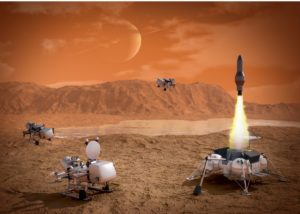
Deep-space probes and rovers will use onboard quantum sensors for self-guided travel and terrain mapping.
🌌 Interstellar Exploration
In the long run, quantum navigation could enable missions to the outer solar system and even beyond Pluto, where no GPS signal can reach.
Imagine a spacecraft navigating through interstellar space entirely on its own — guided only by quantum laws of physics.
Challenges and Limitations
Like any breakthrough, quantum navigation faces hurdles before full deployment:
Miniaturization — Quantum sensors are currently large and sensitive; they must be compact and durable for spaceflight.
Power Consumption — Maintaining ultra-cold temperatures requires energy-efficient cryogenic systems.
Radiation Resistance — Space radiation can disturb quantum systems; shielding and calibration are crucial.
Cost and Complexity — Developing space-grade quantum hardware is expensive and time-intensive.
NASA’s 2026 mission aims to overcome these barriers and prepare the technology for operational use by the 2030s.
Beyond Navigation: Quantum Technologies in Space
Quantum navigation is just one part of NASA’s growing quantum technology ecosystem, which also includes:
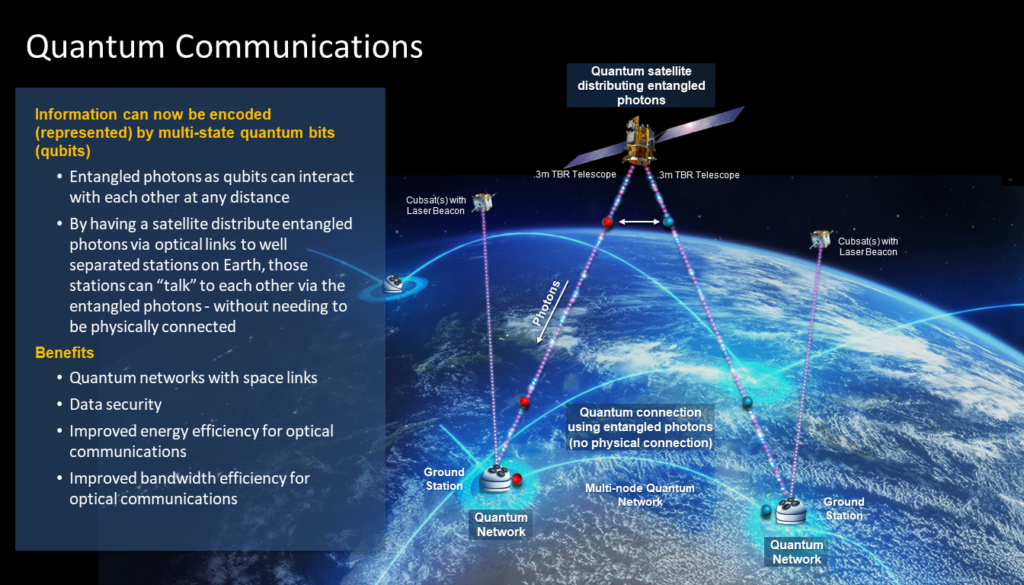
Quantum Communication — unhackable data transmission using entangled photons.
Quantum Computing — ultra-fast data processing for mission planning and analysis.
Quantum Sensing — measuring gravitational fields and dark matter with unmatched precision.
Together, these systems will form the foundation of Quantum Space Infrastructure, enabling smarter, safer, and faster space exploration.
Conclusion
By 2026, NASA’s Quantum Navigation System will mark a new era in how we travel through space.
Instead of depending on Earth’s networks, future spacecraft will navigate independently, powered by the mysterious and powerful behavior of quantum particles.
This isn’t just an upgrade — it’s a paradigm shift in space exploration.
With quantum technology, NASA is building a future where spacecraft can travel anywhere in the universe — knowing exactly where they are, every step of the way.
The next generation of explorers won’t just follow signals from Earth — they’ll follow the laws of physics themselves.
FAQs
What is quantum navigation?
It’s a self-contained navigation system that uses quantum physics (atomic motion and light interference) to determine position and velocity.
Why can’t GPS be used in space?
GPS satellites only orbit Earth; beyond that range, their signals become too weak to detect.
When will NASA test this technology?
In 2026, during small satellite and lunar mission demonstrations.
What are the main benefits?
Extreme precision, independence from Earth signals, and real-time navigation for deep space travel.
How could this help future Mars missions?
It will enable autonomous spacecraft and rovers to navigate accurately without waiting for Earth-based instructions.