
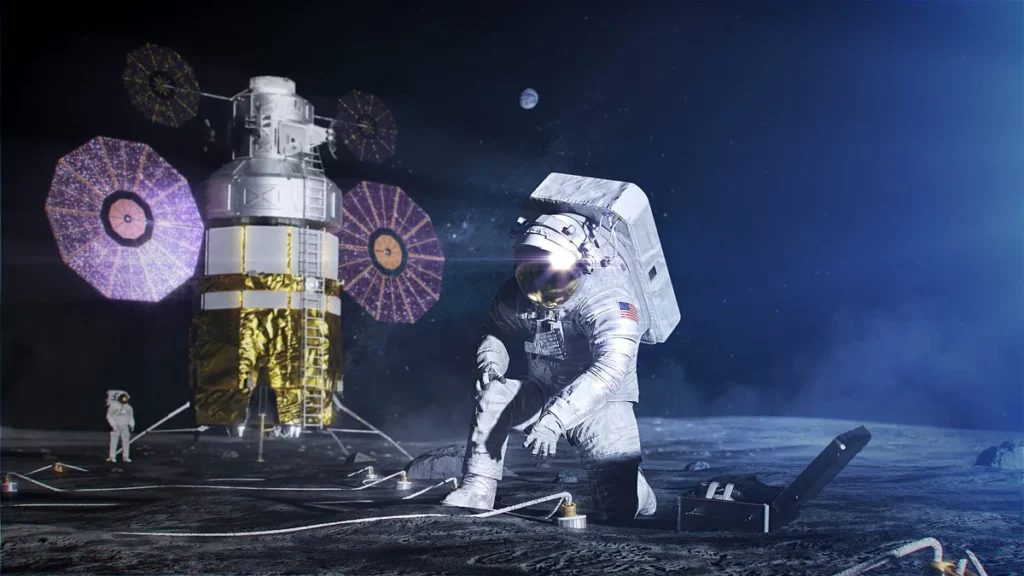
Introduction The Hidden Enemy of Space Missions
Lunar dust — it may look harmless, but for NASA engineers, it’s one of the biggest headaches in space exploration.
This fine, powdery substance sticks to everything: spacesuits, cameras, solar panels, and even life-support systems. It’s sharp like glass, electrically charged, and can cause serious damage to both humans and machines.
As NASA prepares for long-term Moon missions under Artemis 3 and beyond, the agency is racing to perfect its Lunar Dust Mitigation Technology by 2026. This innovation could finally solve one of the most frustrating problems astronauts have faced since Apollo.
Why Lunar Dust Is a Big Problem
During the Apollo missions, astronauts reported that lunar dust clung to their suits and equipment like static electricity on steroids. Once it got inside the spacecraft, it irritated their eyes, damaged joints in space suits, and reduced the efficiency of solar panels.
Imagine living on the Moon for weeks or months — that dust could destroy filters, clog air vents, and reduce power systems. For NASA’s dream of building a sustainable lunar base, controlling lunar dust is absolutely essential.
NASA’s 2026 Solution Smart Dust Mitigation Tech
By 2026, NASA’s scientists and engineers are introducing revolutionary dust-repelling systems designed to keep astronauts and spacecraft clean. Here are the technologies leading the charge:
Electrodynamic Dust Shields (EDS)
NASA’s Electrodynamic Dust Shield uses tiny transparent electrodes to create electric fields that push lunar dust away. It’s like an invisible shield that shakes dust off surfaces — no brushes or air blowers needed.
This technology will be installed on helmets, visors, solar panels, and even lunar rovers.
Dust-Repelling Coatings
Researchers are developing superhydrophobic (water-repelling) and oleophobic (oil-repelling) coatings that make surfaces slippery at the microscopic level. Dust simply can’t stick!
These coatings will protect cameras, sensors, and robotic joints — ensuring smooth operation during long missions.
Smart Spacesuit Fabric
NASA is designing a next-gen spacesuit fabric embedded with dust-resistant fibers and electrical charge control.
In 2026, astronauts might wear suits that clean themselves — reducing maintenance and extending mission duration.
Magnetic Dust Removal Systems
Since some lunar dust particles contain iron, NASA is testing magnet-based systems to pull the dust away from sensitive areas. This tech could be integrated into rovers and base stations.
How NASA Is Testing These Technologies
NASA isn’t just guessing — they’re running extreme simulations.
At facilities like the Marshall Space Flight Center and Glenn Research Center, scientists use lunar dust simulants (man-made moon dust) to test how new materials and systems perform.
They expose surfaces, electronics, and fabric to thousands of dust impacts under vacuum conditions. The goal? To ensure that dust can’t ruin critical systems once astronauts are 240,000 miles away from Earth.
Artemis Missions: The Perfect Testing Ground
The Artemis missions are more than just Moon landings — they’re testbeds for technology that will shape NASA’s future.
By 2026, during Artemis III, NASA plans to test lunar dust mitigation systems directly on the Moon’s surface. Rovers, tools, and spacesuits will carry prototypes of EDS systems and dust-resistant coatings to measure their real-world performance.
The data collected will help design future bases and vehicles for Artemis IV and the Lunar Gateway Station.
The Science Behind the Dust
Why is lunar dust so clingy?
Unlike Earth dust, lunar particles are not rounded — they’re jagged, sharp, and covered with microscopic spikes. Because the Moon has no atmosphere, these particles get electrically charged by solar radiation. When astronauts walk across the surface, the dust jumps and sticks due to static electricity.
That’s why traditional cleaning methods don’t work — you can’t just wipe it off. NASA’s new mitigation tech focuses on electrostatic repulsion and smart coatings to defeat the problem at its source.
The Role of AI and Robotics
NASA is integrating AI and autonomous systems to monitor dust buildup in real-time.
Robotic maintenance units equipped with sensors and micro-dusters can clean solar panels or camera lenses automatically. AI helps predict which areas will get dusty faster and optimizes energy use for cleaning systems.
This combination of AI + smart materials + electrostatic tech represents the next evolution of space engineering.
Global Collaboration NASA Isn’t Alone
NASA is partnering with other organizations, including ESA (European Space Agency), JAXA (Japan), and several universities.
Private companies like Aerojet Rocketdyne and Astroport are also working on dust-free landing pads, anti-static fabrics, and modular lunar habitats that can resist dust infiltration.
Together, these collaborations aim to make lunar living practical and sustainable by 2026 and beyond.
Impact Beyond the Moon
Interestingly, lunar dust mitigation has Earth-based benefits too.
Technologies developed for Moon dust could improve solar panel efficiency, air filtration, and even electronics protection here on Earth.
In other words, NASA’s solutions might one day make your smartphone cleaner — literally!
SEO-Focused Highlights
Primary Keyword: NASA Lunar Dust Mitigation Tech
Secondary Keywords: lunar dust problem, Artemis 2026 mission, dust shield technology, NASA moon base
Meta Description (SEO-Ready):
Discover NASA’s 2026 lunar dust mitigation technology — a breakthrough solution protecting astronauts, rovers, and habitats on the Moon.
Conclusion Dust-Free Future for Lunar Exploration
As NASA’s 2026 missions draw near, Lunar Dust Mitigation Technology is emerging as a silent hero.
Without it, lunar habitats, rovers, and equipment would quickly fail. With it, humanity can finally plan for long-term lunar living and prepare for the next step — Mars.
NASA’s innovation proves one thing: in space exploration, even the smallest particles can inspire the biggest breakthroughs. 🌌