
Meta Description
Discover how AI with long-term memory is transforming the digital world in 2026 — enabling systems that learn continuously, remember context, and evolve like humans.
Introduction
Artificial Intelligence has moved from a fascinating concept to a force driving every industry. But in 2026, AI is entering a completely new era — one where machines can remember, reason, and learn continuously. This revolution is powered by AI with long-term memory, a breakthrough that allows intelligent systems to retain knowledge across time rather than starting from scratch in every session.
Traditional AI could only respond based on temporary data, but now AI systems can store context, recall past experiences, and adapt over months or years. It’s the foundation of a new kind of intelligence — one that feels more human than ever before.
What Is AI with Long-Term Memory?
AI with long-term memory refers to artificial intelligence models that store and recall information from previous interactions. Instead of treating every task as new, they retain contextual understanding. This memory allows them to perform better, make personalized decisions, and evolve through continuous learning.
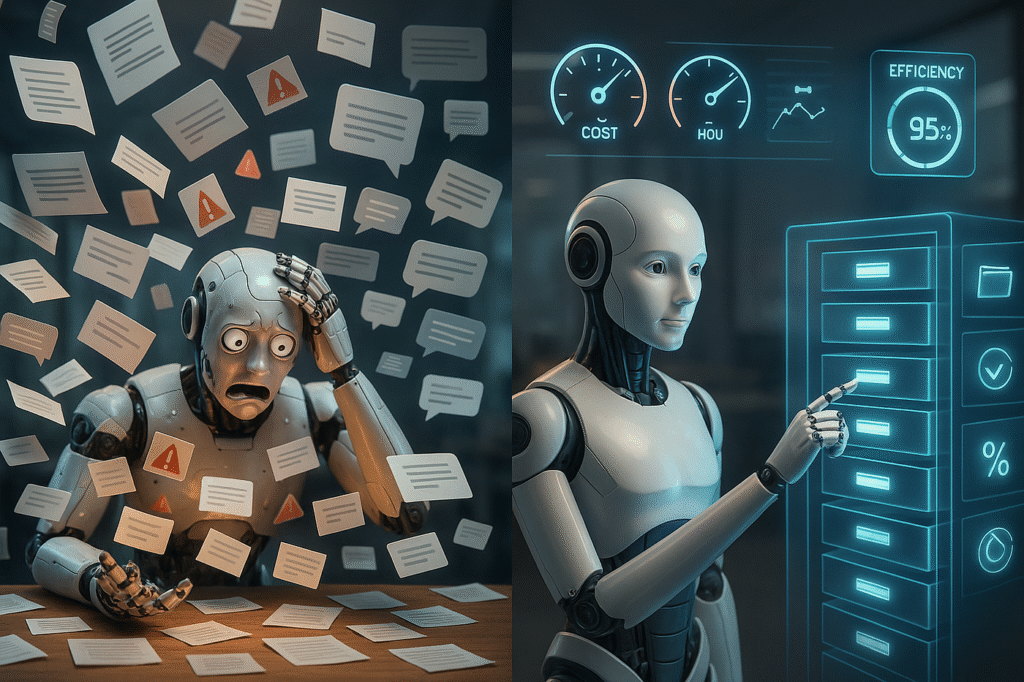
Think of it as the difference between a calculator and a friend. A calculator performs instantly but forgets everything; a friend learns your habits, remembers your goals, and improves advice over time. That’s what memory gives AI — the ability to grow smarter with every experience.
How It Works
Long-term memory in AI combines advanced techniques from deep learning, cognitive computing, and neural storage systems. Some of the key technologies include:
Vector Databases – These help AI recall contextually similar information from past data.
Reinforcement Learning with Memory (RLM) – Allows AI to learn from success and failure over time.
Neural Memory Modules – Layers in neural networks designed specifically to store long-term information.
Knowledge Graphs – Structured databases that connect facts and relationships to create meaning.
Adaptive Retrieval Systems – Mechanisms that decide when and what to recall from stored memory.
Together, these systems make AI less robotic and more reflective — capable of learning from its own experiences just as people do.
Why Long-Term Memory Matters in 2026
The importance of long-term memory AI lies in its ability to create continuity. Machines no longer reset after every task. They learn, adapt, and build on previous outcomes. This helps them:
Improve performance without retraining.
Understand users personally over time.
Offer more natural, conversational experiences.
Reduce data waste and computational costs.
As more industries shift to automation, having AIs that “remember” will become a competitive advantage.
Applications Across Industries
Healthcare
In healthcare, memory-enabled AI can track a patient’s medical history, treatment response, and lifestyle patterns. This helps doctors deliver faster and more accurate diagnoses.
Education
Smart learning platforms use AI with memory to follow a student’s progress, identify weaknesses, and personalize lessons — turning digital tutors into lifelong teachers.
Business and Marketing
Organizations leverage AI that remembers customer preferences, purchase history, and behavior. This makes marketing campaigns smarter and customer support more human-like.
Robotics and Automation
Robots with long-term memory can perform complex tasks by remembering previous attempts, learning from errors, and improving efficiency in factories or logistics.
Cybersecurity
AI systems can recall past attacks and threat patterns, improving their ability to predict and stop cyber intrusions before they happen.
Benefits of AI with Long-Term Memory
✅ Continuous Learning: Improves with every interaction.
✅ Personalization: Understands users better over time.
✅ Efficiency: Reduces need for retraining.
✅ Accuracy: Learns from mistakes instead of repeating them.
✅ Human-like Experience: Makes technology feel intuitive and responsive.
Challenges and Ethical Concerns
Like all major breakthroughs, long-term memory AI also introduces new challenges:
Privacy Risks: Remembering user data requires strict controls to prevent misuse.
Data Storage & Security: Memory must be encrypted to stop breaches.
Bias Retention: If the AI learns from flawed data, it could reinforce bias.
Regulation: Governments need clear frameworks to guide safe development.
Ethical design and transparency will be key to ensuring that AI memory benefits humanity responsibly.
The Future of AI Memory
By 2026 and beyond, memory-based AI will power nearly every digital ecosystem — from personal assistants that truly “know” you to corporate AIs managing global operations.
We’re moving toward agentic intelligence, where AIs don’t just react but plan, decide, and evolve with purpose. Eventually, these systems could form the basis for lifelong learning machines — digital entities that grow in wisdom the way humans do.
Imagine a future where your AI assistant remembers your past goals, improves your productivity, and anticipates your needs — that future is almost here.
Conclusion
AI with long-term memory is more than an upgrade — it’s a transformation. It changes artificial intelligence from a reactive machine into a proactive partner. With continuous learning, adaptive memory, and emotional context, 2026 marks the beginning of truly intelligent systems.
As this technology matures, we’ll see AI that doesn’t just process information — it understands, remembers, and evolves. The line between artificial and natural intelligence will blur, shaping a smarter and more connected world.
FAQs
What makes AI with long-term memory unique?
It can remember information from previous interactions and use it to make better decisions in the future.
Is AI memory similar to human memory?
It’s inspired by human cognition but works digitally — storing and recalling structured data instead of emotions or senses.
Where is long-term memory AI used today?
Healthcare, education, robotics, and customer service industries are early adopters in 2026.
Are there risks to this technology?
Yes, mainly privacy and data security, which require transparent design and ethical frameworks.
Will AI with memory replace humans?
No. It’s designed to assist humans by handling repetitive or data-heavy tasks while people focus on creativity and strategy.