

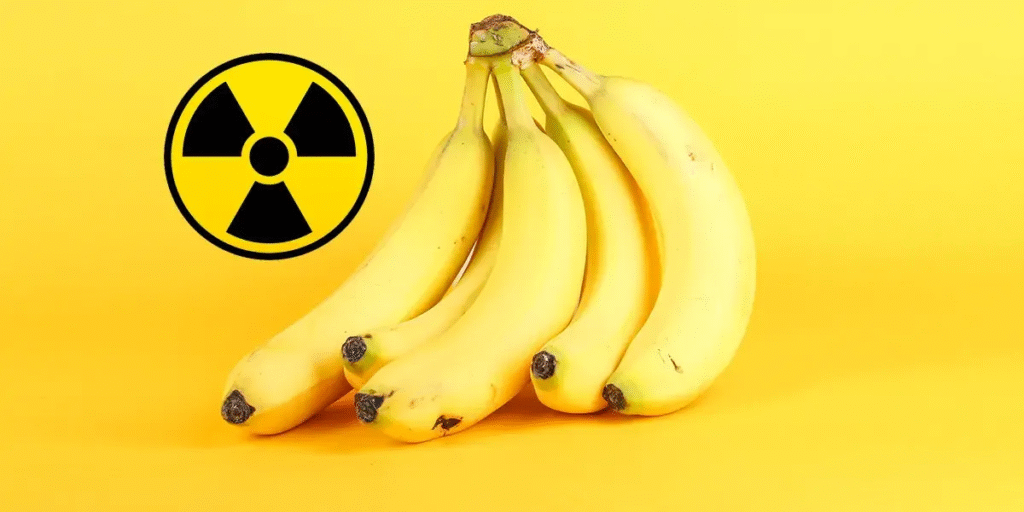
It might sound like a joke, but it’s true: bananas are slightly radioactive. Don’t worry, though — they are perfectly safe to eat. Here’s why this fun fact is real, and what it actually means.
Bananas contain a lot of potassium, which is an important mineral that helps your muscles work and keeps your heart healthy. But a very tiny part of that potassium is a special kind called potassium-40, and that’s where the radioactivity comes from.
Potassium-40 is a naturally radioactive isotope, meaning it gives off small amounts of radiation as it breaks down over time. This happens slowly and naturally in the environment, and your body is already used to handling it.
Because bananas have more potassium than many other fruits, they give off a little more radiation — but still a tiny, harmless amount. In fact, you would have to eat millions of bananas at once to even come close to a dangerous level of radiation. That’s obviously not possible!
Scientists sometimes even joke about this by using a made-up unit called the “banana equivalent dose.” It’s a fun way to explain how small certain amounts of radiation are — like comparing a dental X-ray to eating a few bananas.
So yes, bananas are radioactive — but in the safest way possible. They’re still one of the healthiest snacks around, full of vitamins, fiber, and energy.
In short: Bananas are radioactive because of the natural potassium-40 inside them, but it’s nothing to worry about. It just shows how cool and surprising science can be!