
Science is humanity’s tool for understanding the world around us. From the tiniest atoms to the vastness of the universe, science helps us explain natural phenomena, develop technology, and improve our lives. Yet, despite centuries of study and countless discoveries, many mysteries remain unsolved. These unanswered questions continue to challenge scientists and inspire curiosity in people of all ages.
In this article, we will explore some of the greatest mysteries of science, from the deep oceans to the far reaches of space, and the questions that continue to puzzle researchers today.
The Origin of the Universe
One of the biggest mysteries in science is how the universe began. According to current theories, the universe started with the Big Bang approximately 13.8 billion years ago. This explosive expansion created space, time, and all the matter we know today.
Despite the evidence supporting the Big Bang, questions remain. What caused the Big Bang? Was there something before it? And what exactly is dark matter and dark energy, which together make up about 95% of the universe yet remain invisible and poorly understood?
These mysteries remind us that while we can observe and measure the universe, its origins are still shrouded in uncertainty.
The Nature of Consciousness
Consciousness—the awareness of ourselves and the world—is another profound scientific puzzle. Neuroscience has revealed much about how the brain functions, but why we experience thoughts, emotions, and self-awareness remains unknown.
Is consciousness purely a product of brain activity, or is there something more? Philosophers, neuroscientists, and psychologists continue to debate this question. Understanding consciousness could revolutionize medicine, artificial intelligence, and our understanding of what it means to be human.
Black Holes and Cosmic Mysteries
Black holes are regions of space where gravity is so strong that nothing, not even light, can escape. They are invisible, yet their presence can be detected by observing the effect on nearby stars and gas.
While scientists have captured the first-ever image of a black hole’s event horizon, many questions remain. What happens inside a black hole? Do black holes destroy information, or is it somehow preserved? And could black holes be gateways to other parts of the universe?
These cosmic mysteries challenge our understanding of physics and the laws of nature.
Life Beyond Earth
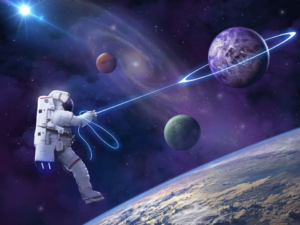
For centuries, humans have wondered if we are alone in the universe. With the discovery of exoplanets, moons with subsurface oceans, and extremophiles (organisms that thrive in extreme conditions on Earth), the possibility of extraterrestrial life has become more realistic.
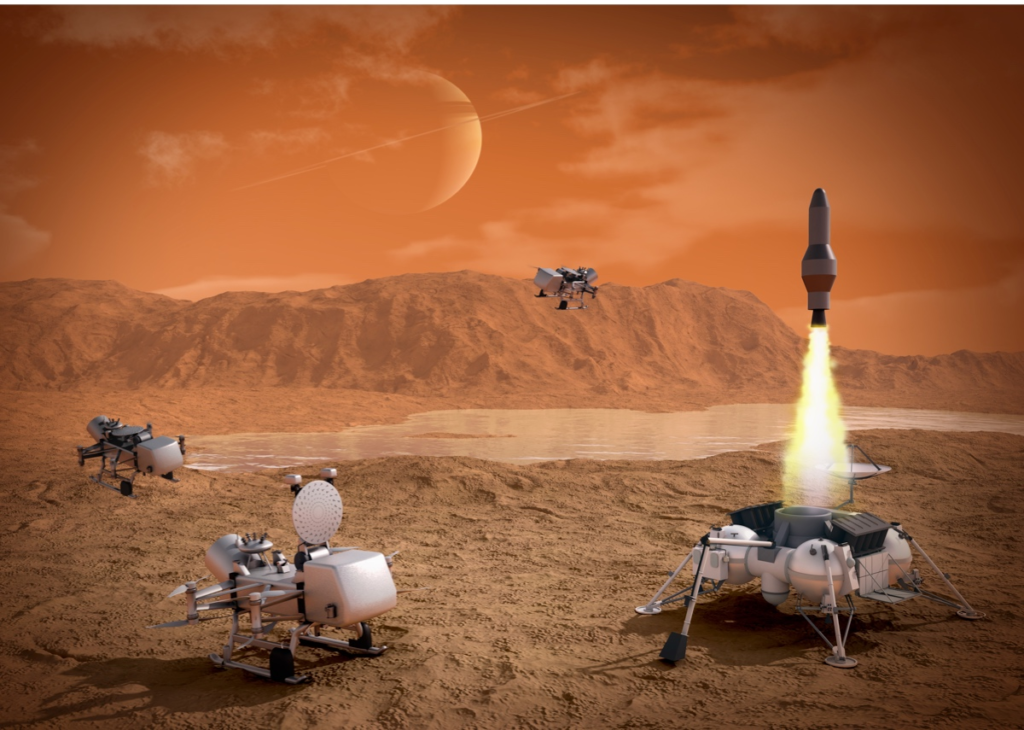
Scientists are searching for microbial life on Mars, signs of life on Europa and Enceladus, and even technosignatures—signals from advanced civilizations—far beyond our solar system. The discovery of extraterrestrial life, even in its simplest form, would profoundly change our understanding of biology, evolution, and our place in the cosmos.
The Deep Oceans: Unexplored Worlds
Earth’s oceans cover more than 70% of the planet, yet over 80% of the ocean remains unexplored. The deep sea is home to bizarre creatures, unknown ecosystems, and underwater geological formations that challenge our imagination.
From the glowing bioluminescent organisms to massive, undiscovered species, the deep ocean remains one of the last great frontiers on Earth. Studying these depths can reveal new species, potential medical compounds, and clues about the origins of life on our planet.
The Human Genome and Genetic Mysteries
Mapping the human genome was a groundbreaking achievement, yet it has raised new mysteries. Why do humans have non-coding DNA, often called “junk DNA,” which does not seem to produce proteins? How do tiny changes in our DNA lead to complex traits like intelligence, creativity, or susceptibility to diseases?
Genetic research is also raising ethical questions about gene editing, designer babies, and the limits of altering human biology. Understanding our genetic blueprint is one of the most intriguing scientific quests of our time.
The Nature of Time
Time is something we all experience, yet its true nature remains mysterious. Physics tells us that time can stretch or contract depending on speed and gravity, according to Einstein’s theory of relativity. But why does time move in one direction? Why do we perceive past, present, and future in a linear way?
Time may also be connected to other unsolved mysteries, such as the nature of the universe, entropy, and the potential existence of parallel universes. Understanding time could unlock secrets about reality itself.
Unexplained Phenomena on Earth
Science has also encountered strange phenomena right here on Earth. For example:
- Ball lightning: Rare, glowing spheres observed during thunderstorms.
- Fast radio bursts: Mysterious signals from distant galaxies with unknown origins.
- Quantum entanglement: Particles connected across vast distances, appearing to affect each other instantly, challenging our understanding of physics.
These mysteries highlight that even in familiar environments, science still has much to uncover.
Why Mysteries Matter
The unknown drives human curiosity and innovation. Unsolved scientific questions inspire researchers to explore, experiment, and invent. Mysteries also teach humility—reminding us that despite all our knowledge, the universe is far more complex than we imagine.
Science thrives on the unknown. Each discovery often leads to more questions, fueling an endless cycle of learning and discovery. From deep space to deep oceans, from genetics to consciousness, mysteries challenge us to think critically and creatively.
Conclusion: Embracing the Unknown
The mysteries of science are a testament to humanity’s quest for understanding. While we have made extraordinary progress in explaining the natural world, countless questions remain unanswered.
From the origins of the universe and the nature of consciousness to the unexplored depths of the oceans and the search for life beyond Earth, science continues to expand the boundaries of knowledge. These mysteries are not just challenges—they are opportunities. They encourage curiosity, inspire innovation, and remind us that exploration is at the heart of human nature.
As we look to the future, the unknown will continue to drive science forward. Each experiment, mission, or discovery brings us closer to understanding the universe and ourselves. Embracing the mysteries of science allows us to dream, question, and explore a world—and universe—full of wonder.