
Introduction
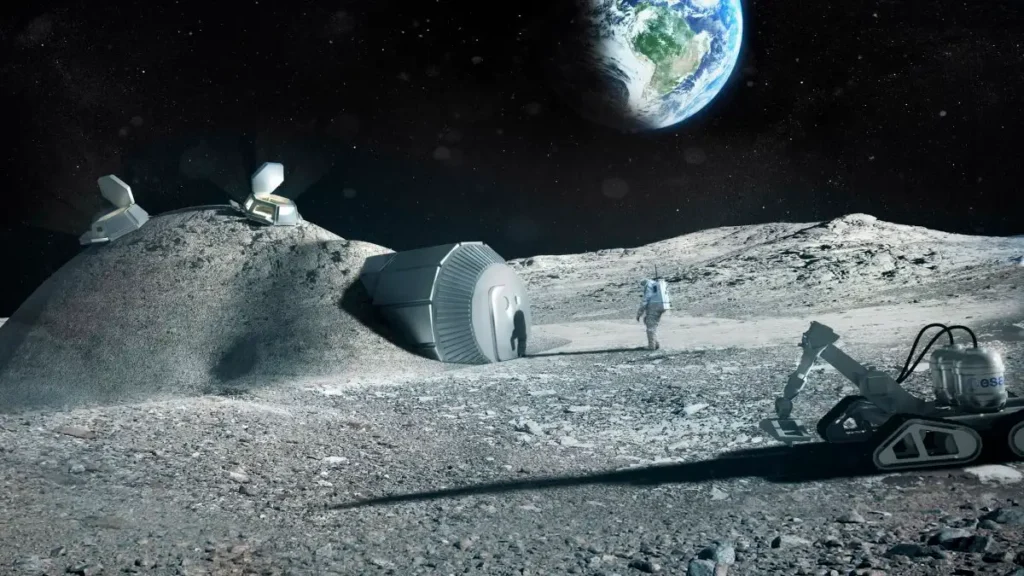
As humanity prepares to return to the Moon, NASA’s 2026 lunar base power infrastructure stands at the heart of this bold new era. Creating a reliable, self-sustaining power system on the lunar surface is one of NASA’s top priorities — a foundation that will support astronauts, research, and industrial activities for decades to come.
The Moon’s environment presents unique challenges: extreme temperatures, two-week-long nights, and no atmosphere to transmit electricity. To overcome these obstacles, NASA is developing advanced solar, nuclear, and wireless energy systems that will keep the upcoming lunar base running 24/7.
By 2026, NASA’s lunar power infrastructure will mark a new milestone — proving that sustainable energy beyond Earth is not just possible but essential for humanity’s future in space.
Why Lunar Power Infrastructure Matters
Energy is the lifeblood of any space mission. For the lunar base, power will be needed to:
Operate life support and communication systems
Run scientific instruments and robotics
Maintain temperature and lighting
Support construction, mining, and manufacturing on the Moon
NASA’s Artemis program, which aims to establish a permanent lunar presence, depends on a robust energy system that can function in harsh lunar conditions. The goal is to create an “energy ecosystem” that supports human life, exploration, and resource utilization.
NASA’s 2026 Lunar Power Goals
NASA’s roadmap for 2026 focuses on sustainability, reliability, and scalability. The agency plans to deploy energy systems that can:
Operate autonomously with minimal human intervention.
Survive the lunar night, which lasts about 14 Earth days.
Expand as the lunar base grows.
Integrate renewable and nuclear power sources seamlessly.
These systems will form the backbone of future Moon-to-Mars missions, providing a model for energy generation and distribution in deep space.
Primary Power Systems for NASA’s Lunar Base
Solar Power Arrays
Solar energy will be NASA’s first and most abundant power source on the Moon. Engineers are designing deployable solar arrays that can track sunlight and operate in rugged lunar terrain.
Key Features:
Lightweight and foldable solar panels for easy transport.
Dust-resistant coatings to maintain efficiency.
Autonomous deployment using robotic systems.
Energy storage using lithium-ion or advanced solid-state batteries.
NASA plans to install these solar arrays in areas near the lunar poles, where sunlight is available most of the year. The Peaks of Eternal Light near the south pole are ideal spots for continuous solar exposure.
Nuclear Power The Kilopower Reactor
Solar energy alone cannot sustain the base during the two-week-long lunar night. That’s where nuclear fission comes in. NASA’s Kilopower Project, developed in partnership with the U.S. Department of Energy, is a small, portable reactor designed for space use.
Kilopower Highlights:
Generates up to 10 kilowatts of continuous power.
Uses uranium-235 fuel with built-in safety mechanisms.
Can operate autonomously for 10+ years without refueling.
Compact and easily transportable on lunar landers.
By 2026, NASA plans to deploy one or more Kilopower reactors to provide base-load power during the lunar night and emergencies.
Wireless Power Transmission
To efficiently distribute energy across the lunar surface, NASA is experimenting with wireless power transmission using microwave and laser technology.
This system can beam power from solar collection stations to distant habitats, mining sites, or rovers — reducing the need for heavy cables.
Advantages:
Provides flexible power delivery to multiple locations.
Enables mobile operations and rovers to recharge remotely.
Reduces infrastructure weight and installation complexity.
NASA’s 2026 tests aim to demonstrate how wireless power can keep multiple lunar assets connected in a single energy network.
Energy Storage Systems
Since sunlight is not always available, storing energy is vital. NASA is developing high-density battery systems and cryogenic fuel cells to keep essential systems powered during the lunar night.
Battery Innovations Include:
Solid-state batteries with extreme temperature resistance.
Regenerative fuel cells that convert hydrogen and oxygen into electricity, then back into fuel.
Thermal management systems to maintain performance in harsh conditions.
These storage solutions ensure that the lunar base remains operational even when solar or nuclear systems are offline for maintenance.
Infrastructure Design: Building an Energy Network
NASA envisions a modular power grid for the Moon — similar to smart grids on Earth but adapted for space.
Components of the Lunar Power Network:
Central Energy Hubs: Control and monitor power generation and distribution.
Autonomous Maintenance Robots: Detect and repair power system faults.
AI-Powered Management Systems: Optimize energy use and predict maintenance needs.
Resilient Communication Links: Ensure uninterrupted data transfer between modules.
This decentralized approach makes the system resilient — even if one power source fails, others can compensate automatically.
Collaborations and Commercial Partners
NASA is working with several private and government partners to accelerate lunar power development:
Lockheed Martin & Northrop Grumman: Designing modular solar systems.
Blue Origin & SpaceX: Providing transport for power equipment.
U.S. Department of Energy (DOE): Supporting Kilopower and nuclear research.
Astrobotic & Intuitive Machines: Testing surface power deployment systems.
Together, these collaborations form the foundation of a sustainable lunar economy built on shared technology and innovation.
Challenges and Solutions
Building power infrastructure on the Moon is no easy task. NASA faces several challenges — and is already developing solutions:
| Challenge | NASA’s Solution |
|---|---|
| Extreme temperature fluctuations | Thermal protection and underground cable design |
| Lunar dust interference | Dust-repelling materials and electrostatic shields |
| Long lunar nights | Kilopower reactors and energy storage |
| System reliability | AI-powered maintenance and redundancy systems |
By addressing these obstacles, NASA ensures that its 2026 lunar base will remain energy-independent and mission-ready.
Environmental and Scientific Benefits
A reliable lunar energy system will also enable continuous scientific research on the Moon’s geology, resources, and radiation environment. Moreover, developing clean, sustainable energy technologies for space will inspire innovations for renewable power on Earth.
NASA’s work on solar efficiency, mini-reactors, and power storage could directly benefit remote communities, disaster zones, and renewable infrastructure back home.
SEO Key Elements
Primary Keyword: NASA Lunar Base Power Infrastructure
Secondary Keywords: Lunar energy systems, NASA Artemis power plans 2026, Moon solar power, Kilopower reactor, wireless energy transmission
Meta Description (SEO-ready):
Discover NASA’s 2026 lunar base power infrastructure — how solar, nuclear, and wireless energy systems will power the next generation of Moon missions.
Suggested SEO Title: NASA Lunar Base Power Infrastructure 2026: Powering Humanity’s Return to the Moon
Conclusion
NASA’s lunar base power infrastructure represents a giant leap toward permanent human presence on the Moon. By combining solar arrays, nuclear reactors, and wireless energy systems, NASA is building a power network strong enough to sustain exploration, science, and industry.
The 2026 mission will prove that energy independence beyond Earth is achievable — lighting the way for a new era of space settlement and technological innovation that benefits both the Moon and our planet.