
Meta Description
Explore NASA’s robotic swarm concepts for planetary mapping in 2026, using autonomous multi-robot systems to survey alien terrains, improve data collection, and enable efficient exploration of the Moon, Mars, and beyond.
Introduction
Exploring planetary surfaces in detail has always been a challenge. Traditional rovers provide valuable data, but are limited in range, coverage, and redundancy.
In 2026, NASA is developing robotic swarm technologies for planetary mapping — coordinated groups of small, autonomous robots capable of surveying large areas, analyzing terrain, and sharing data in real time.
Robotic swarms promise to transform planetary exploration, providing high-resolution maps, detecting hazards, and supporting future human missions on the Moon, Mars, and other celestial bodies.
Why Robotic Swarms Are Important
Robotic swarms offer several advantages over single large rovers:
Coverage: Multiple robots can explore vast areas simultaneously.
Redundancy: If one robot fails, the swarm continues its mission.
Efficiency: Parallel data collection speeds up mapping and reconnaissance.
Flexibility: Swarms can adapt to dynamic terrain and obstacles.
Collaboration: Robots communicate to optimize exploration patterns and resource allocation.
NASA’s 2026 initiative leverages advances in autonomous AI, swarm robotics, and sensor miniaturization to enable intelligent, coordinated planetary exploration.
NASA Robotic Swarm Concepts 2026
NASA is exploring several designs for robotic swarms:
Small Modular Robots
Compact, lightweight robots equipped with cameras, spectrometers, and environmental sensors.
Capable of autonomous navigation and data collection in challenging terrain.
Can cooperate to climb obstacles, cross craters, and map uneven surfaces.
Communication and Networking
Robots form mesh networks to share data and coordinate movement.
Reduces dependency on Earth communication for real-time decision-making.
Enables collective intelligence, improving exploration efficiency.
Autonomous Navigation and AI
Onboard AI algorithms guide robots, avoid hazards, and prioritize mapping areas.
Machine learning allows adaptation to unknown terrain and unexpected obstacles.
Swarm behavior ensures optimal coverage without human intervention.
Multi-Terrain Operation
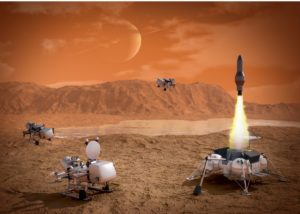
Designed to operate in diverse environments: lunar regolith, Martian sand, icy moons, and asteroid surfaces.
Robust against dust, temperature extremes, and radiation.
Can integrate with aerial drones or orbital satellites for coordinated mapping.
Scientific and Operational Goals
NASA’s robotic swarm missions aim to:
High-Resolution Planetary Mapping: Generate detailed topographical and geological maps.
Hazard Detection: Identify cliffs, craters, unstable terrain, and potential landing sites.
Resource Identification: Detect minerals, ice deposits, and other materials for future missions.
Autonomous Exploration: Reduce reliance on Earth-based control and communication.
Support Human Missions: Prepare detailed terrain data for astronauts and robotic infrastructure deployment.
Robotic swarms provide a scalable solution for exploring remote, dangerous, or previously inaccessible areas.
Challenges of Robotic Swarms in Space
Communication Latency: Delays in relaying data to Earth require fully autonomous coordination.
Energy Management: Small robots must optimize battery life for long-duration missions.
Durability: Survive extreme temperatures, dust storms, radiation, and rugged terrain.
Coordination Complexity: Swarms must avoid collisions, maintain coverage, and respond to individual failures.
Software Reliability: AI algorithms must handle unpredictable environments without errors.
NASA addresses these challenges through robust hardware, advanced AI, redundancy protocols, and extensive simulations before deployment.
Impact of Robotic Swarm Exploration
Robotic swarms will have significant scientific and operational impact:
Planetary Science: Enables comprehensive mapping and study of surfaces, geology, and potential resources.
Mission Efficiency: Reduces time and cost of surface exploration.
Scalable Exploration: Multiple swarms can be deployed on different celestial bodies simultaneously.
Technological Advancement: Advances autonomous robotics, AI, sensor miniaturization, and swarm communication.
Public Inspiration: Demonstrates futuristic exploration capabilities and fosters global interest in space and robotics.
Robotic swarms represent the future of planetary reconnaissance and autonomous surface operations.
Future Prospects Beyond 2026
NASA envisions:
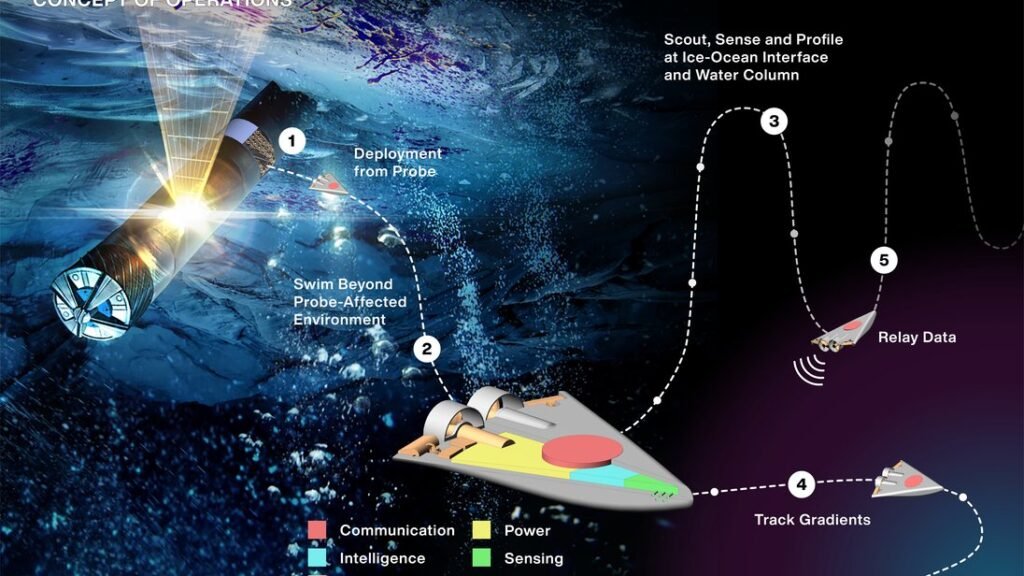
Large-scale swarm missions to the Moon, Mars, and icy moons like Europa and Titan.
Integration with aerial drones, subsurface probes, and orbital satellites for multi-dimensional mapping.
Swarm missions supporting construction of lunar or Martian bases, scouting hazards, and resource identification.
Interplanetary swarm networks for real-time monitoring and autonomous scientific research.
By 2030, robotic swarms could be the primary method of planetary surface exploration, operating in coordination with humans and orbiting spacecraft.
Conclusion
NASA’s robotic swarm for planetary mapping 2026 initiative represents a revolutionary step in space exploration. By combining AI, autonomous robotics, and collaborative swarm behavior, these missions will provide detailed, efficient, and resilient mapping of alien worlds.
This technology not only accelerates scientific discovery but also lays the foundation for future human exploration, enabling safer, faster, and more informed missions across the solar system. 🤖🪐